Case study · 2024
Healthy Busy Life Quiz
A diagnostic quiz that routes each user through a large catalogue of programmes towards a personal, actionable next step — and doubles as the top of a considered funnel. Live for one year, 2500+ submissions, many of them qualified leads.
- Role
- Product Designer, Strategist & Copywriter
- Focus
- Product thinkingFunnel logicCopywritingTypeform · Zapier · KajabiBuilt 100% without AI
- Year
- 2024
Overview
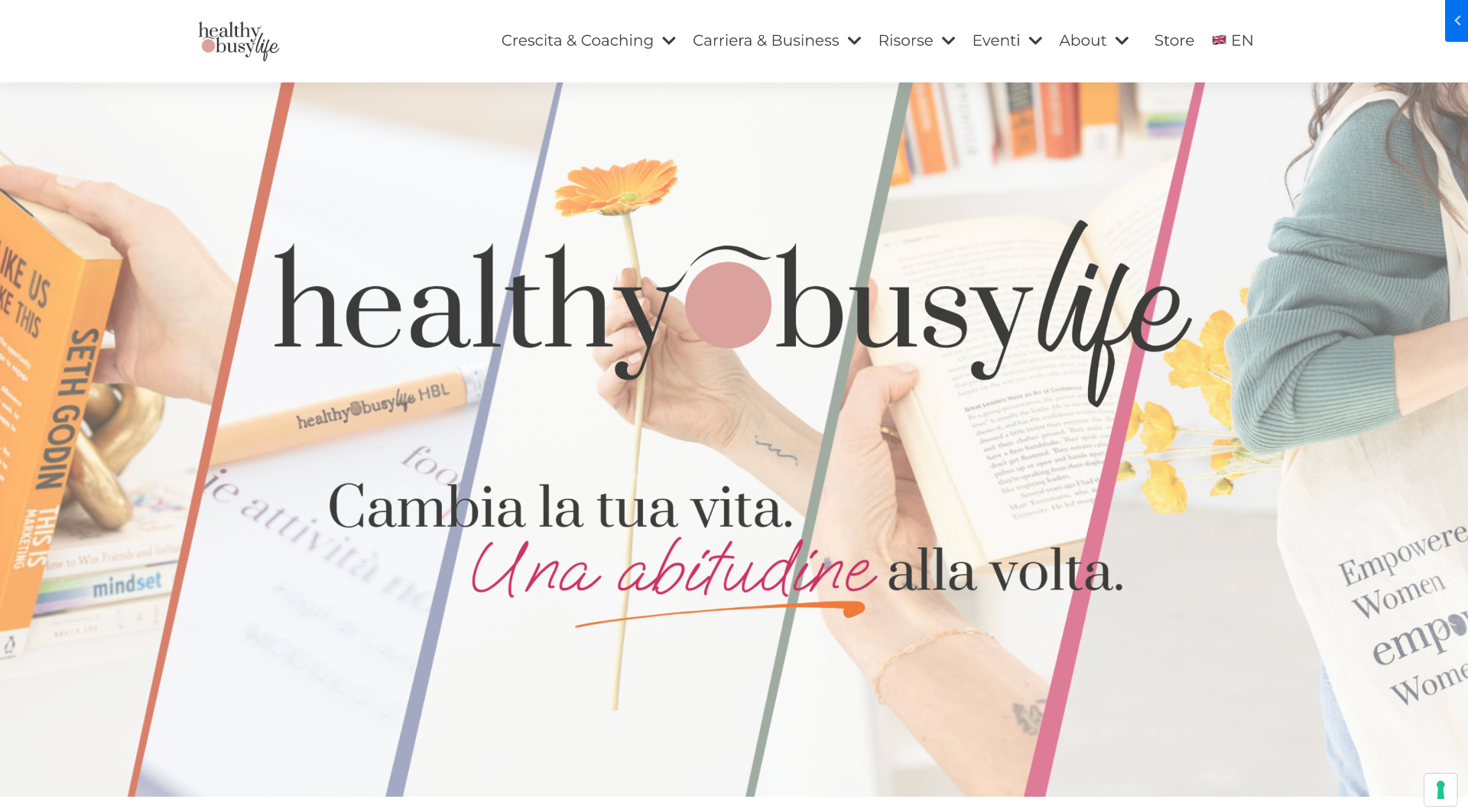
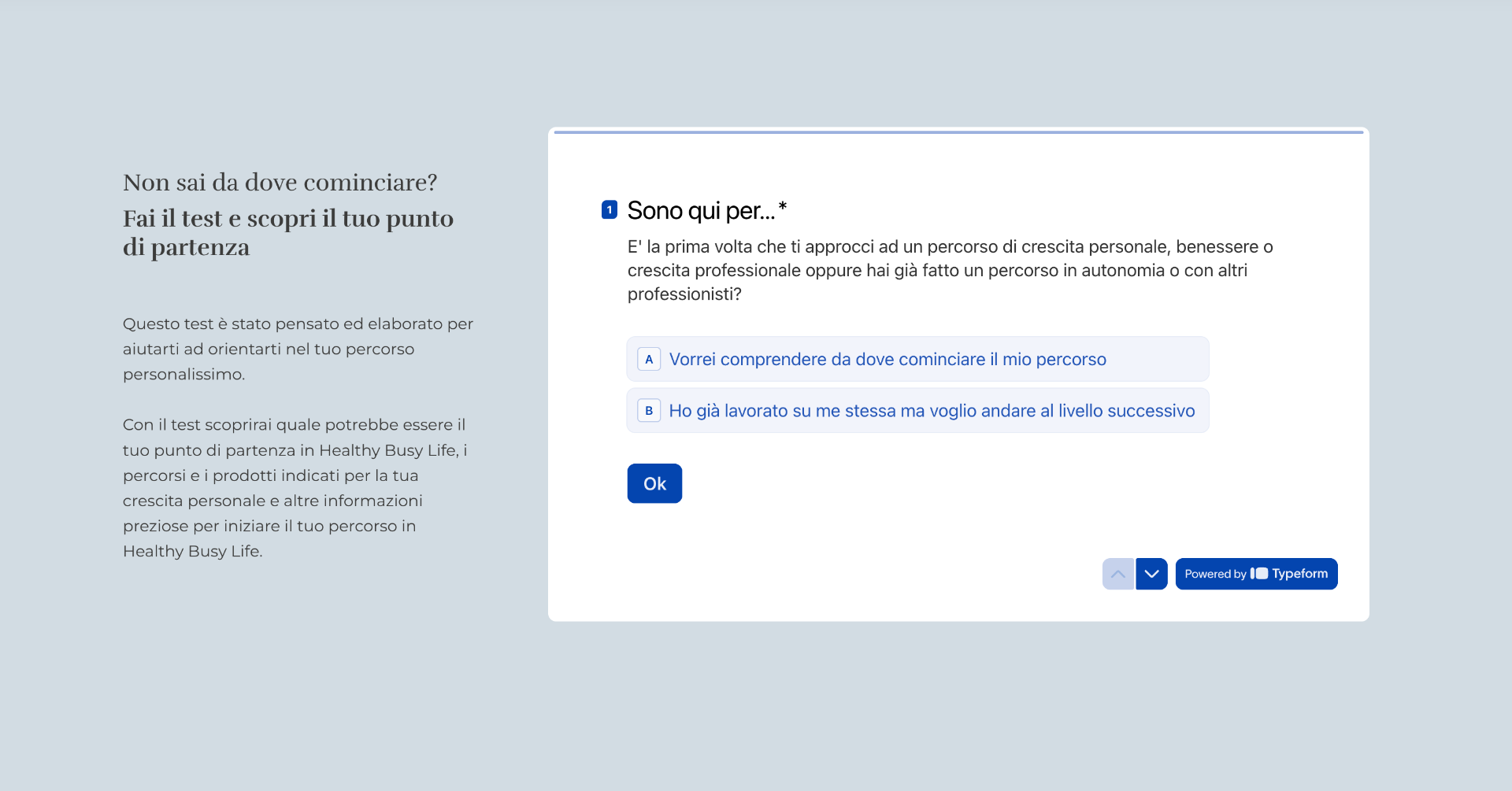
A diagnostic quiz for Healthy Busy Life, an Italian personal-growth and career platform. The quiz sits between a broad promise ("change your life, one habit at a time") and a wide catalogue of programmes — courses, academies, guides, reboots — and its job is to route each visitor to the one next step that actually fits her.
The quiz ran in Italian (the platform's language) and was live for about a year, collecting 2500+ submissions, a meaningful share of which turned into qualified leads for the business.
The core of the project
Three pieces of work carried the whole thing:
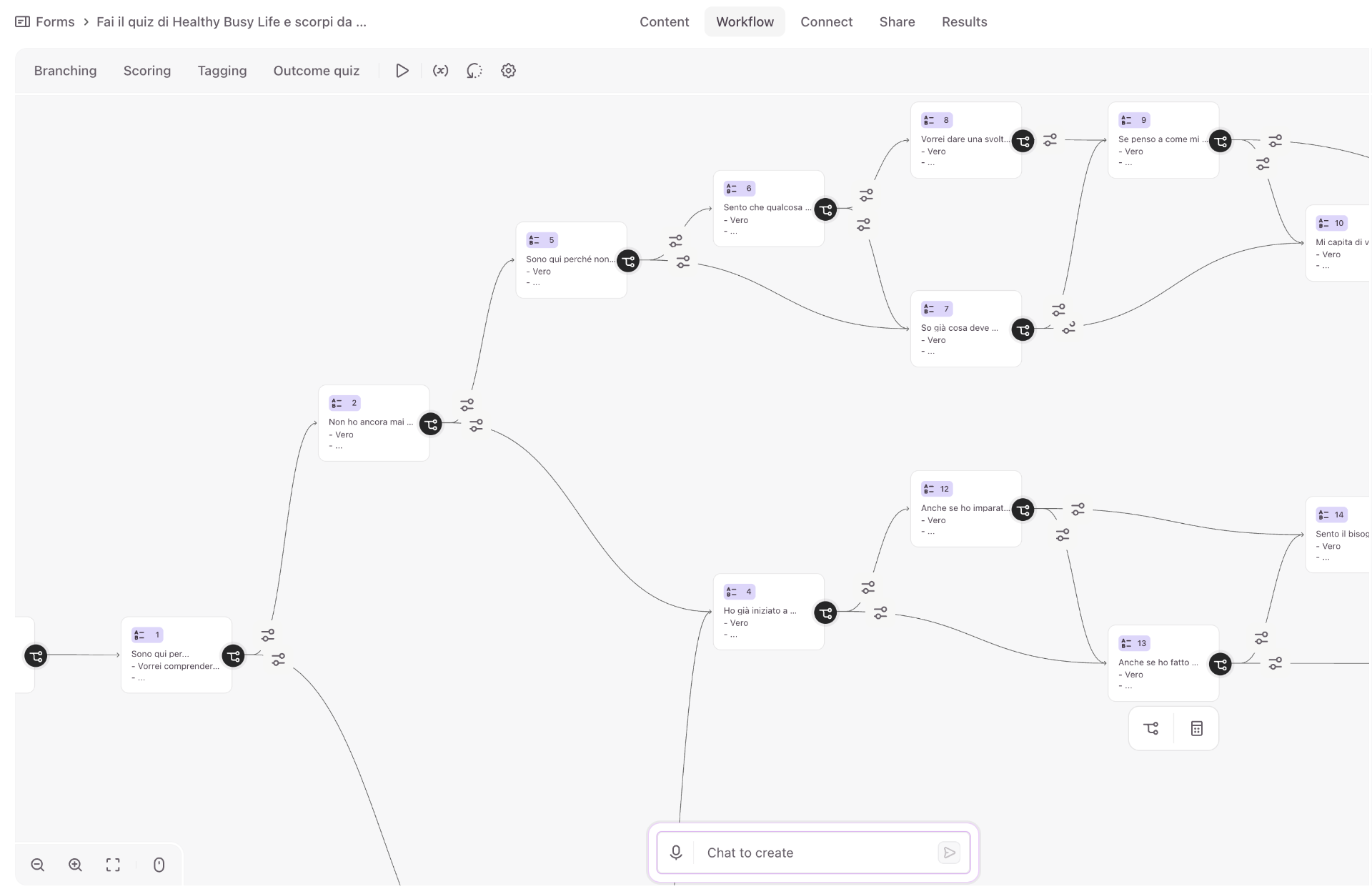
1. The routing logic. Designing the decision tree that guides a visitor through a large product catalogue to the single most relevant path — nine outcome profiles (three beginner, four intermediate, two advanced) reached through roughly ninety branched questions.
2. The plumbing. Making Typeform, Zapier (with a custom JavaScript step), Kajabi and the email system behave as one product, so the user stays in a coherent loop from first click to follow-up.
3. The writing. Every question, every outcome screen and every follow-up email written to feel personal — not like a marketing funnel wearing a quiz costume.
Design, logic and copy were built 100% without AI.
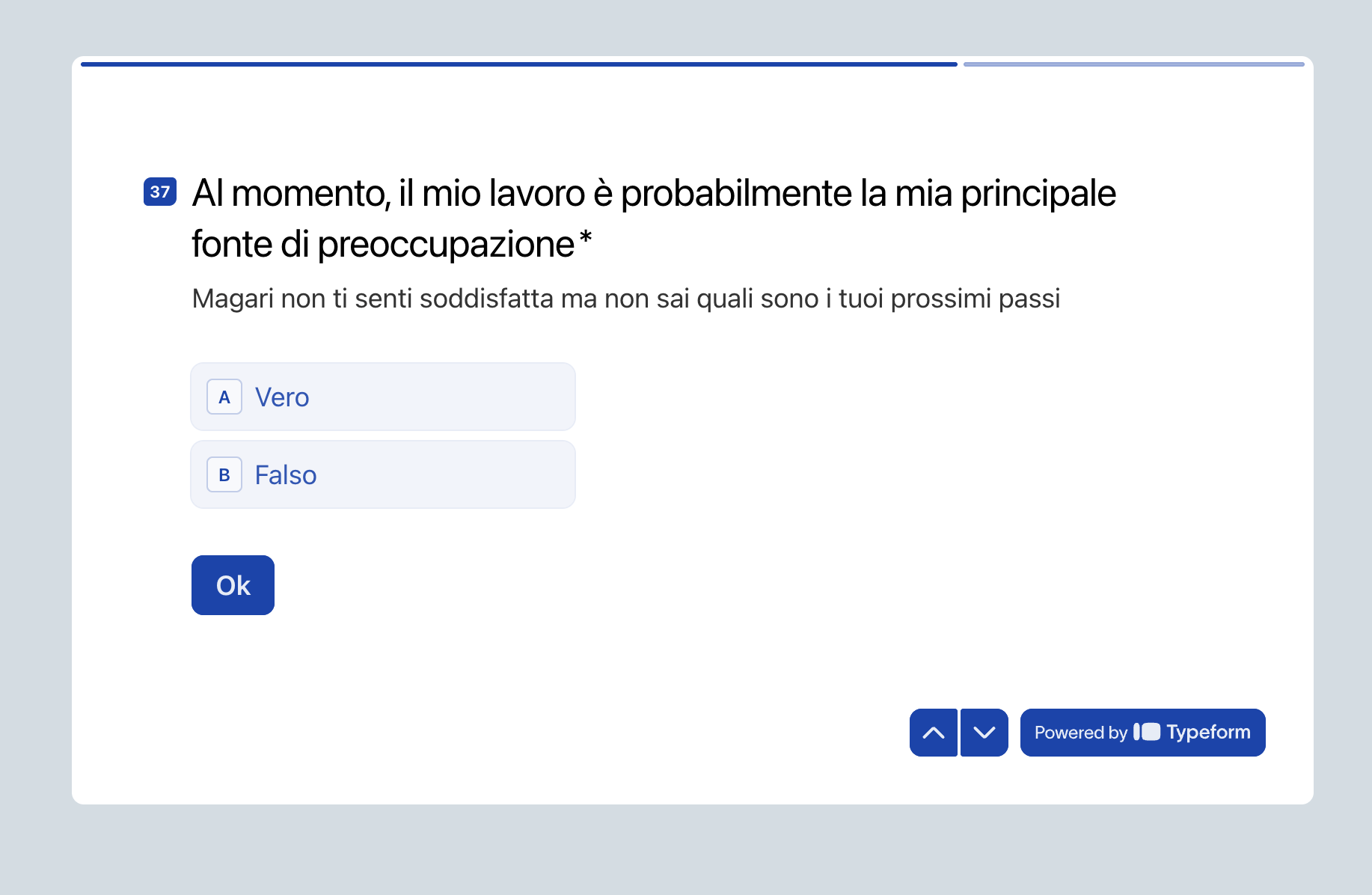
Designing the logic
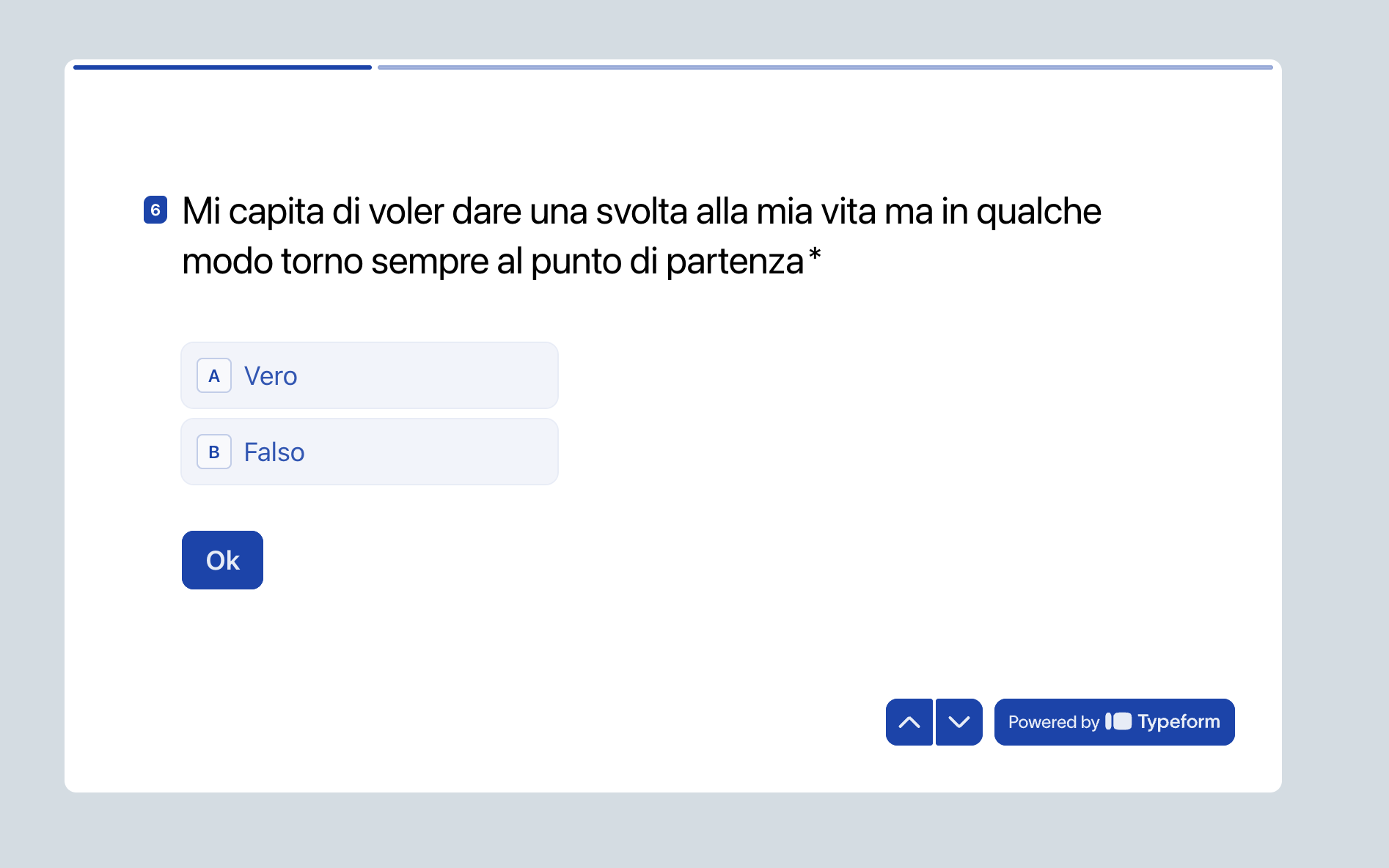
Under the hood the quiz is a scoring and tagging system. A handful of early "trigger" questions set the profile (beginner / intermediate / advanced, with sub-variants for career focus, self-sabotage, readiness for a demanding change, and so on). Later questions add tags per product area — nutrition & habits, productivity, business, career transition, the academy, the 7-day reboot.
The exact thresholds, scoring rules and code that decide who ends up where stay with me — but the important part is that every outcome, every branch weight and every fallback was reasoned and calculated by hand, not generated. That is what made the copy on the other side possible.
Typeform · Zapier · Kajabi
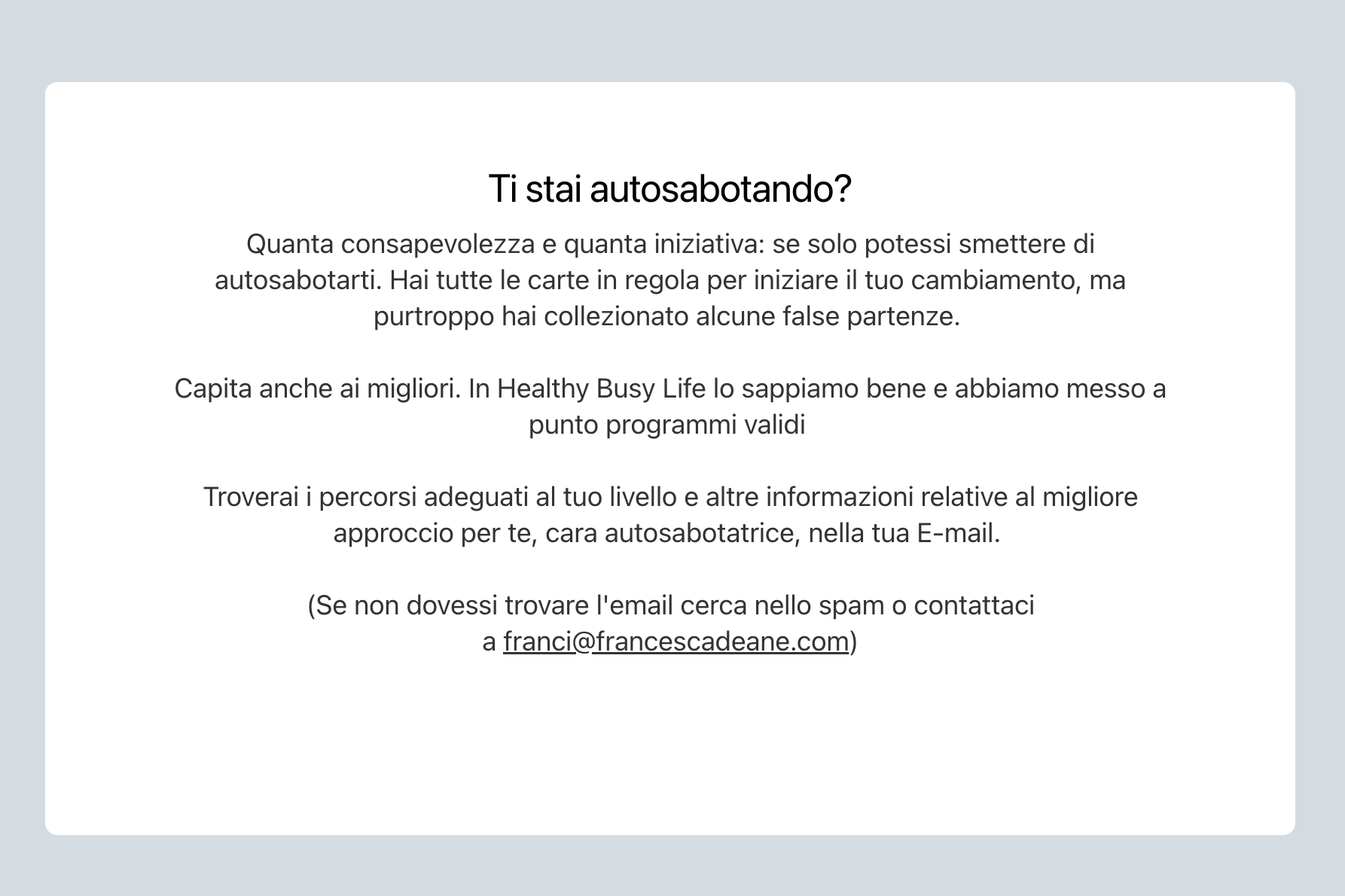
Typeform handled the interview and the immediate on-screen outcome. A Zapier workflow — with a custom JavaScript step — translated the answers into the right profile, assembled the personalised email body from modular text blocks, and pushed the correct tags into Kajabi so the user landed in the right automations and product recommendations. Kajabi sent the final, long-form email and kept the person in the loop from there.
The copy
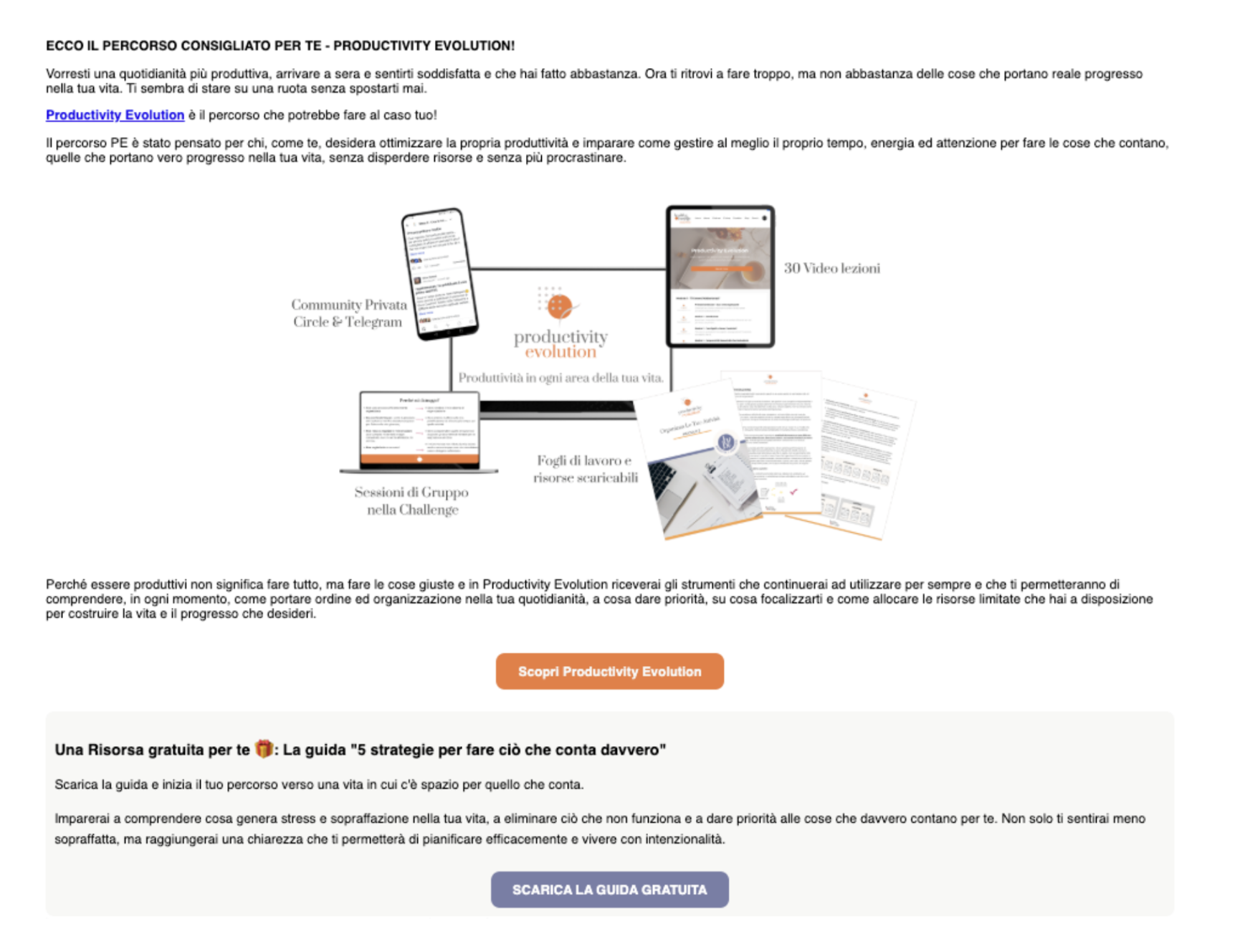
Each of the nine outcomes has its own on-screen message and its own email, written to sound like a person talking to another person. Beginner paths are reassuring ("we've all been there"); self-sabotage paths are direct without being harsh; intermediate paths hand the decision back to the user; advanced paths skip the preamble.
The emails are modular: a fixed introduction and closing, and a middle section stitched together from blocks selected by the profile and the product tags. The same engine that decides the outcome also decides which product recommendations, guides and calls to action appear — and, just as importantly, which ones don't.
Outcome
Over roughly a year the quiz collected more than 2500 submissions, with a completion rate well above the industry benchmark for a ~90-question flow, and became a steady source of qualified leads for the platform's core programmes. It also turned into a research instrument: the tag distribution across submissions was the clearest signal the brand had about what people were actually asking for.
Lessons learned
Two things stuck with me. First: on a wide catalogue, the quiz is the product — routing is design, not marketing. Second: personal-feeling copy scales further than personalised copy. A good modular system of human sentences beat any attempt at "smart" generation, and it was one of the reasons this project was worth building end to end, by hand.
Building the integration was also a fun coding experience that pulled me deeper into JavaScript and HTML than I had gone before. Writing the logic, debugging the hand-off between tools, and watching the right email land in the right inbox made the whole system feel real in a way that pure design work rarely does.